Turkey in Winter: Istanbul, Ephesus and Cappadocia Compared
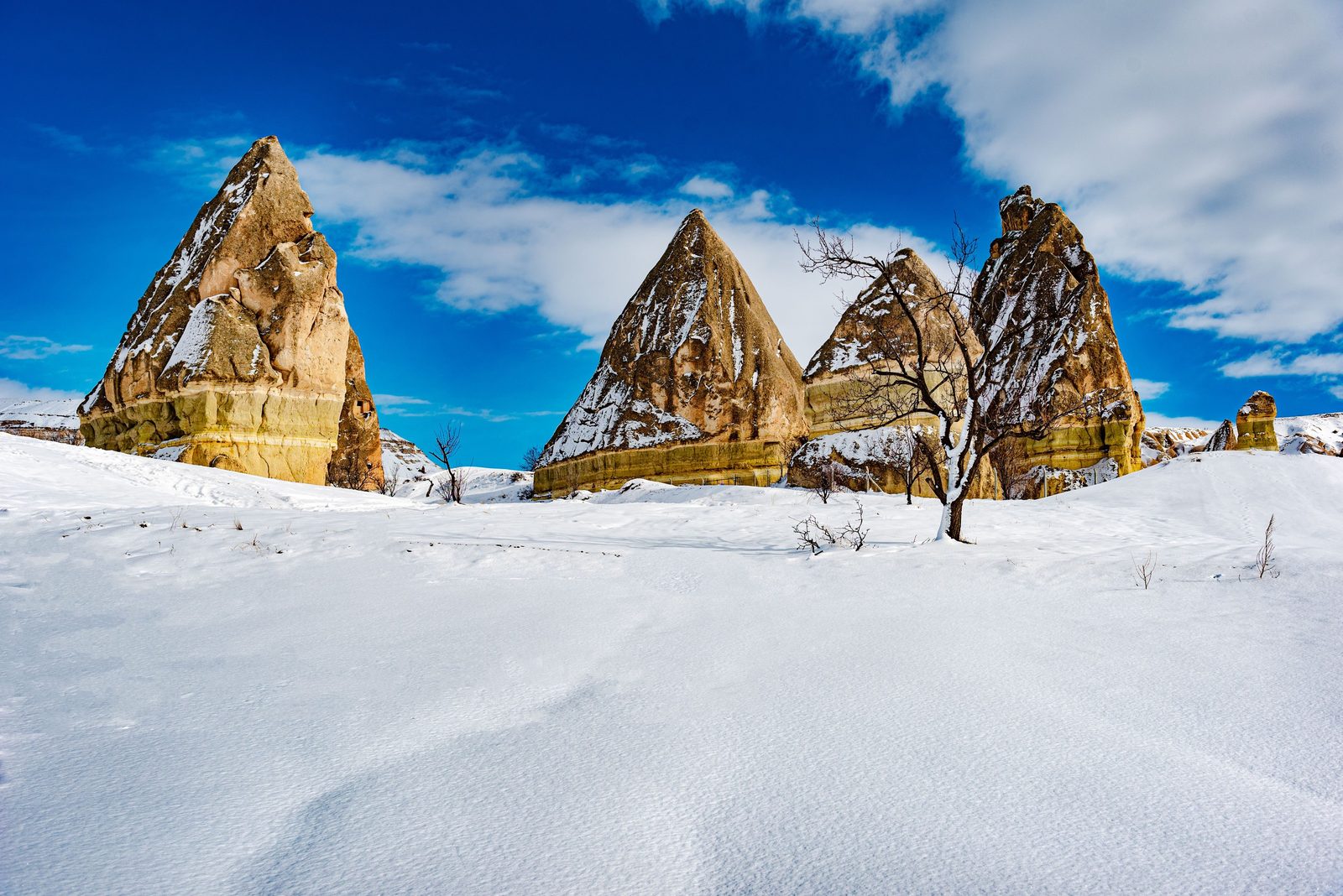
Turkey in winter, from November to March, is the quietest and least expensive time to see Istanbul, Ephesus and Cappadocia, as long as you pack for three different climates. In January Istanbul averages about 10°C by day, the Aegean coast near Ephesus about 13°C, and Cappadocia 4°C, with nights below freezing and a good chance of snow.
Those are the Turkish State Meteorological Service's long-period averages, and they explain how a winter trip feels on the ground. Istanbul is gray and damp but full of indoor sights. Ephesus is mild, green and empty of cruise crowds. Cappadocia is the cold one, and also the most beautiful when snow sits on the fairy chimneys. The trade-offs are the same everywhere: short days, rain, and a few seasonal places that close.
Turkey in winter at a glance
- Istanbul: about 10°C by day, 4°C at night in January; rain on around half the days.
- Ephesus and the Aegean coast: about 13°C by day in January; rain, rarely snow; no cruise-ship crowds.
- Cappadocia: about 4°C by day, −4°C at night in January; snow likely from December to February; balloons fly, weather permitting.
- Daylight: nine to nine and a half hours around the shortest day; sunset comes between roughly 17:20 and 18:00.
- Prices: hotels are at their lowest, except around New Year.
Is winter a good time to visit Turkey?
Yes, if you want quiet sights and lower prices more than warm weather. Between November and March, Istanbul's monuments and Ephesus have a fraction of the summer crowds, and Cappadocia can be under snow. The costs are cold mornings, rain, and daylight that ends around 17:30.
Winter suits travelers who are happy in a coat, who would rather see Hagia Sophia or the Library of Celsus without a crowd than swim, and whose dates are fixed by school or work calendars anyway. It suits less well anyone who wants beach days, long evenings outdoors, or a balloon flight on one fixed morning with no room to move it. For the full-year view, our best time to visit Turkey guide sets winter beside spring, summer and autumn.
Turkey in winter: the three regions side by side
The table gives the average daytime high and overnight low for each winter month, from the Turkish State Meteorological Service (MGM) long-period statistics. Istanbul is measured at three city stations; Ephesus has no station of its own, so the coast column uses İzmir, the nearest long-period record, about an hour to the north. Selçuk, the town at the gates of Ephesus, runs a degree or two cooler at night.
| Month | Istanbul | Ephesus coast (İzmir record) | Cappadocia (Nevşehir record) |
|---|---|---|---|
| November | 16° / 10° (61° / 50°) | 19° / 11° (66° / 51°) | 12° / 3° (53° / 37°) |
| December | 12° / 7° (53° / 44°) | 14° / 8° (58° / 46°) | 6° / −1° (43° / 30°) |
| January | 10° / 4° (49° / 40°) | 13° / 6° (55° / 42°) | 4° / −4° (39° / 26°) |
| February | 10° / 4° (50° / 40°) | 14° / 6° (57° / 43°) | 6° / −3° (42° / 27°) |
| March | 12° / 6° (54° / 42°) | 16° / 8° (62° / 46°) | 10° / 1° (51° / 33°) |
Rain follows a different pattern from the cold. Istanbul is the wettest of the three by number of days, with rain on about 16 days in January; İzmir averages about 13 rainy days in December and January, often in heavy bursts; Cappadocia gets about 12 days of rain or snow a month but the lowest totals. An average is not a forecast, so check the week before you fly.
Istanbul in winter: indoor sights, ferries and New Year
Istanbul in winter is cool, gray and often wet, and that is exactly when its great buildings are at their best. Hagia Sophia, the Blue Mosque, Topkapı's treasury rooms, the Basilica Cistern and the Grand Bazaar are all under a roof, and the queues that fill a June morning are much shorter. Snow falls on a few days in most winters, and the old city under snow is a rare sight worth getting up early for.
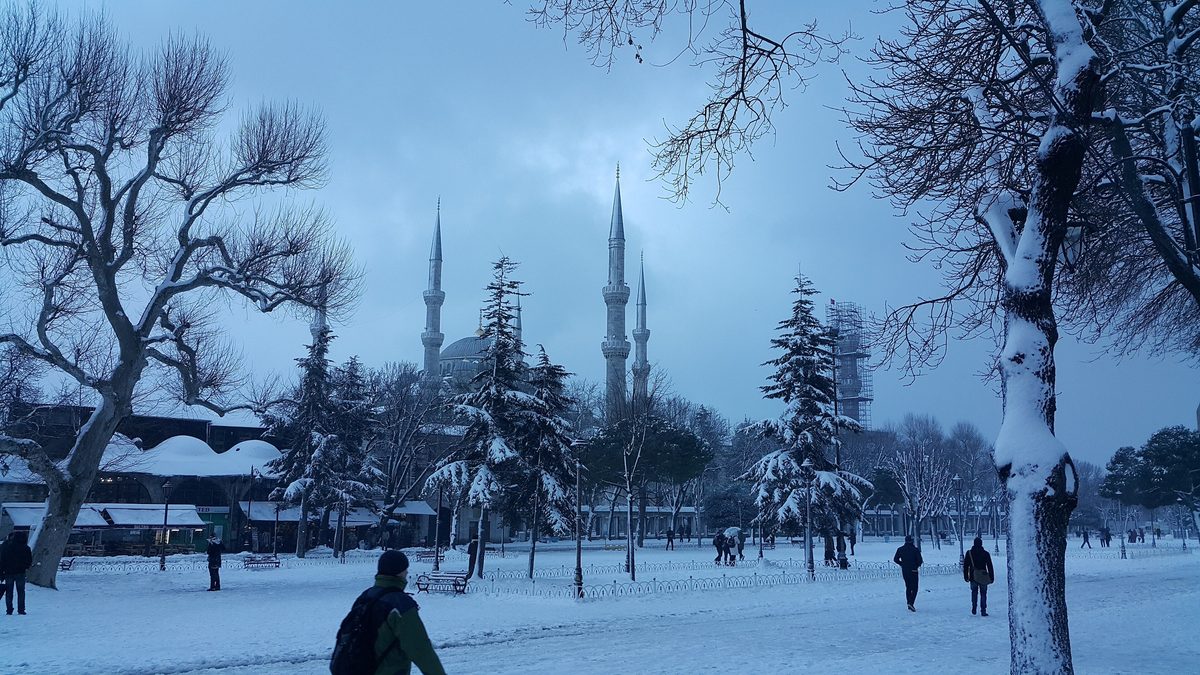
Two things change. Bosphorus boats can be canceled when the sea is rough, so a cruise on the water belongs on a flexible day, not the last one. And the light goes early: in late December the sun sets at about 17:40, so a guide will put the outdoor walking in the middle of the day and the indoor sights at the edges.
Christmas and New Year are a common question. December 25 is a normal working day in Türkiye, with museums and shops on their usual hours; the city's churches hold Christmas services, and the shopping streets put up lights for the New Year. New Year's Eve is the big night out, and January 1 is a public holiday. Hotel prices, low through the rest of the winter, rise for the days around New Year, so book early if you want to be in Istanbul then. Our Istanbul colleagues cover the season in more detail in the best time to visit Istanbul.
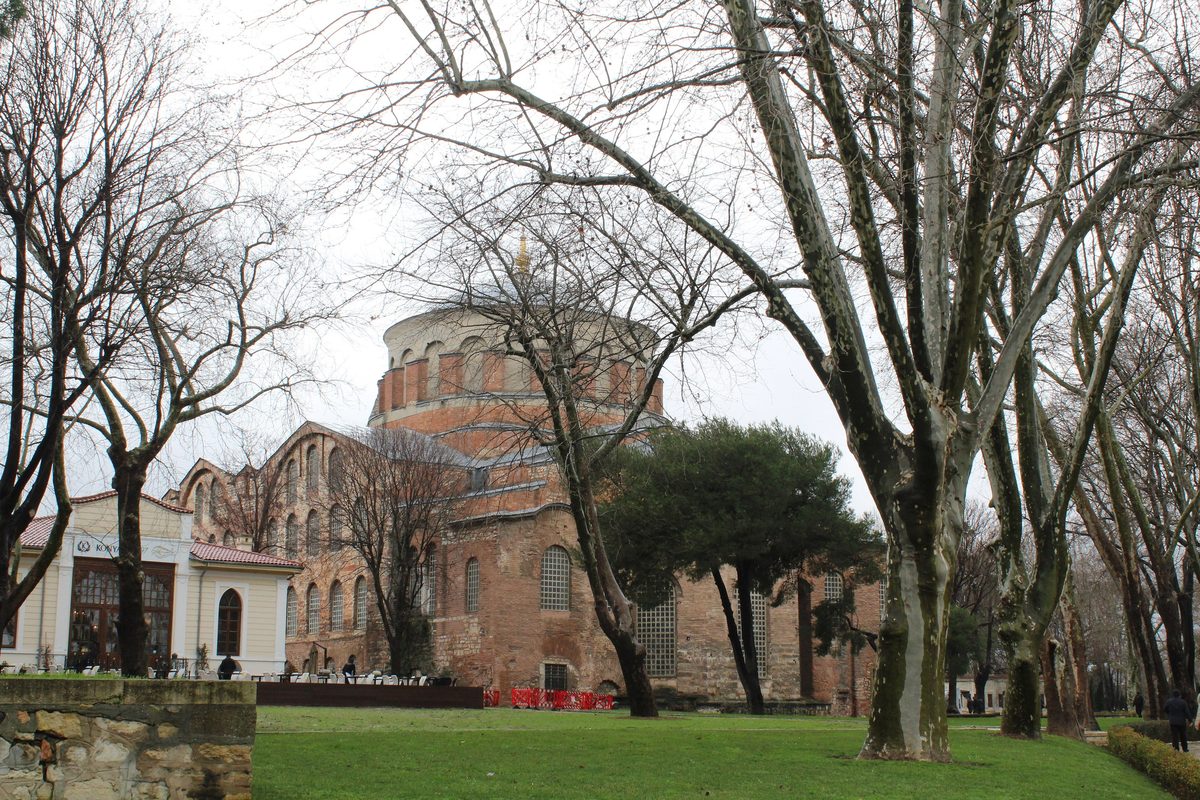
Ephesus in winter: mild days, rain and no cruise crowds
Ephesus in winter is the mildest stop of the three. December and January days average 13°C to 14°C on the coast, the hills around the ancient city turn green, and Kuşadası's cruise season, which runs roughly from March to November, is over. Most of the year the big crowds at Ephesus arrive with the ships in a mid-morning wave; in winter there are only a few ships, and on many days you can stand on Curetes Street with almost nobody in your photograph.
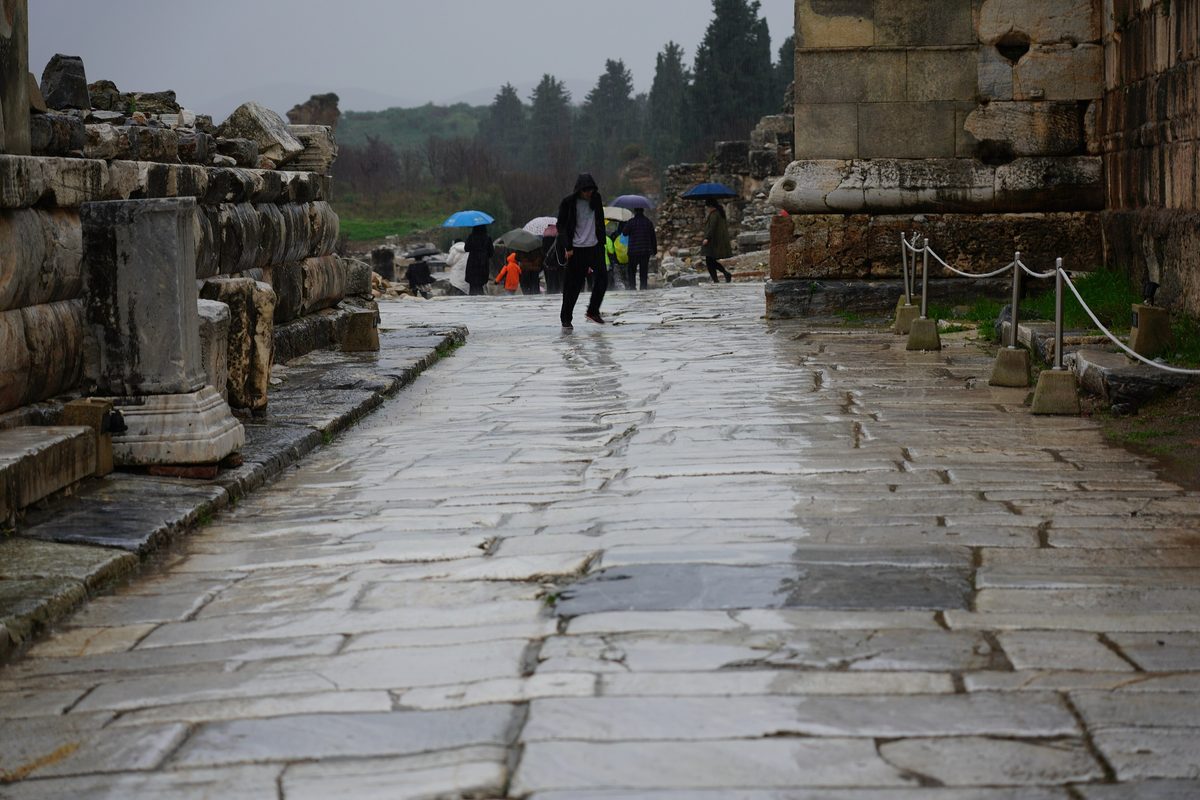
The price is rain. If you are wondering about the weather in Ephesus, Turkey, in November, it is the month the rain returns: İzmir's record gives about nine rainy days, with highs near 19°C. The polished marble is slippery when wet, so grippy shoes come first. The site keeps winter hours of 08:00 to 18:00, with the last ticket at 17:30, and stays open in ordinary rain; the Terrace Houses, under their modern roof, are the natural place to be during a downpour. Our sister site The Ephesus keeps the current tickets and opening hours, and Ephesus by Locals has a live Ephesus forecast with month-by-month clothing advice.
Along the coast, a good number of the big seasonal beach hotels close for the winter. Hotels in Kuşadası town and family-run guesthouses in Selçuk stay open, and Selçuk is the closer base for Ephesus. The sea is too cold for most swimmers until late spring, so a winter Aegean stay is about the ruins, the villages and the food rather than the beach.
Cappadocia in November, December and the snow months
Cappadocia is where winter really means winter. It sits on a plateau more than a thousand meters up, so it is the coldest of the three by a wide margin: the long-period record for Nevşehir gives a January average of 4°C by day and −4°C at night. Cappadocia in November is the gentle start, with days around 12°C, nights around 3°C and the valleys quiet. Cappadocia weather in December brings the first month whose average night is below freezing, and snow on the fairy chimneys stops being a long shot.
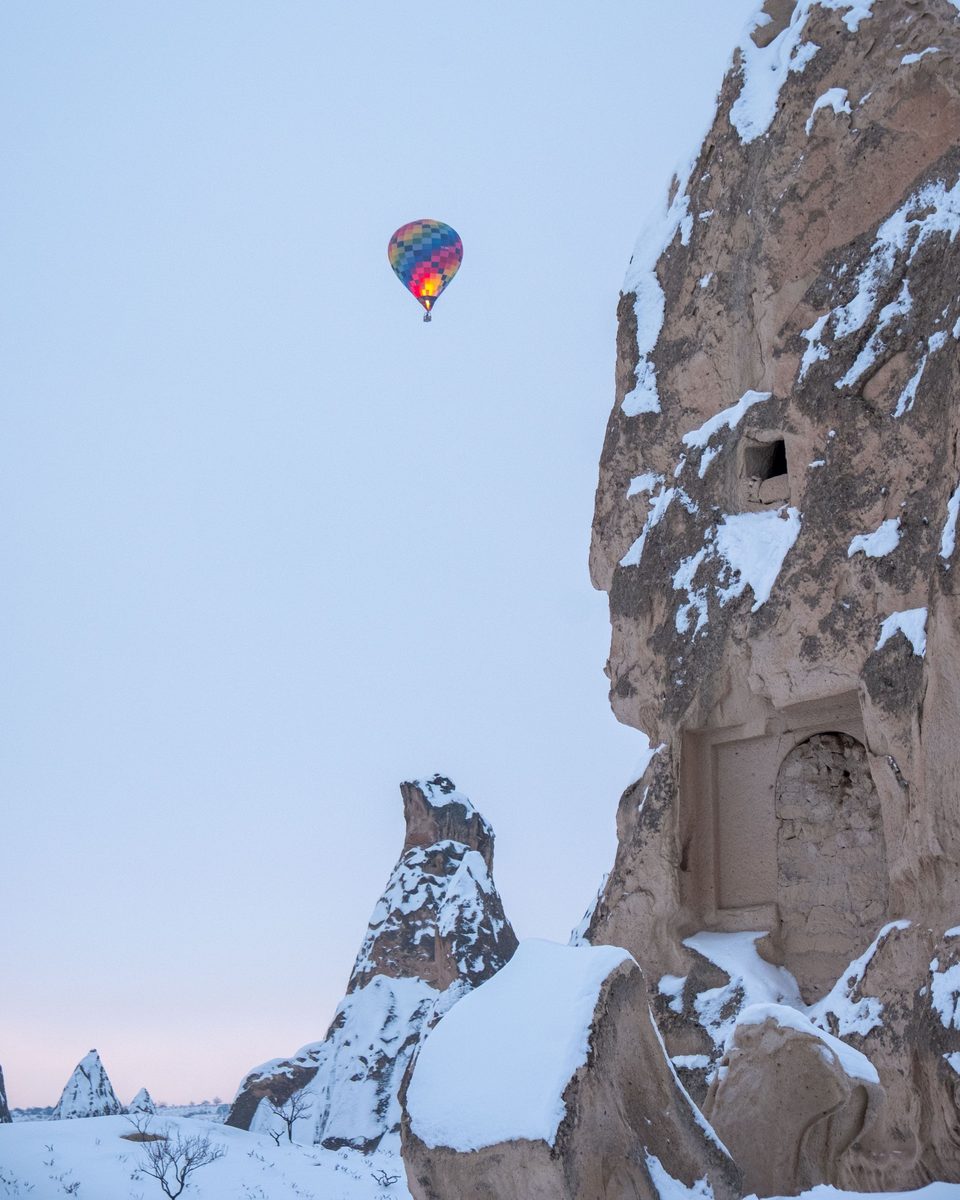
Balloons fly all winter, and a basket over white valleys is the photograph many winter travelers come for. Each flight depends on the dawn wind, and the aviation authority grounds the balloons more often in winter than in autumn. The plan that works is the same one our Cappadocia guides give all year: book the flight for your first morning and stay two or three nights, so a canceled dawn can move to the next one. Their Cappadocia month by month page has the figures for every month, and Cappadocia in winter covers the snow season itself.
The sites stay open. Göreme Open Air Museum, the underground cities and the Ihlara Valley do not close for the season, though some keep shorter winter hours, and the underground cities stay at much the same temperature all year. Roads are cleared quickly after snow, but valley trails can be icy or muddy, so walking routes are chosen on the day.
Planning a winter trip across the three
The distances do not change in winter, but the margins do. Short days mean fewer stops per day, so a route that fits in eight days in May can feel rushed in January. Our post on how many days you need in Türkiye sets out the usual split; in winter, add a night in Cappadocia for the balloon and keep one loose half-day in Istanbul for the weather. The legs between the regions are flights, set out in getting from Istanbul to Ephesus and Cappadocia.
Pack for the coldest stop, not the average: a warm coat, a hat and gloves for Cappadocia's dawns, a waterproof layer for Istanbul and the coast, and closed shoes with a good grip for wet marble and icy paths. Mosques ask visitors to cover shoulders and knees, and women to cover their hair, which is easy in winter clothes. If Ramadan matters to your dates, it falls in February and March in 2027; check the exact days before you book. Our destinations page covers what each region offers beyond these three.
Why short winter days suit a private guide
With nine to nine and a half hours of daylight, the order of the day decides how much you see. On a private tour, your guide starts when you are ready, puts the outdoor sites in the brightest hours and moves indoors when the rain comes. Entry at the big sites is skip-the-line, with tickets we buy in advance; the tickets themselves are billed separately, at exactly the Ministry's gate price. How it works, and how to ask for a winter plan, is on our private tours page.
About this page
- Written by: the 141 Journeys guide team, licensed guides who work in Istanbul, Ephesus and Cappadocia through the winter.
- Sources: Turkish State Meteorological Service official statistics for Istanbul, İzmir and Nevşehir; opening hours and ticket prices from the Ministry of Culture and Tourism's muze.gov.tr.
- Last reviewed: October 2026. Opening hours and ticket prices are set by the Ministry and can change; we confirm them before your tour.
Frequently asked
Does Turkey get cold in winter?
Yes, inland. Cappadocia averages 4°C by day and about −4°C at night in January. Istanbul is cool and damp at around 10°C by day, and the Aegean coast near Ephesus is the mildest of the three at about 13°C. The figures are the Turkish State Meteorological Service's long-period averages.
Does it snow in Turkey in winter?
Yes, in Cappadocia it often does, from December to February, and the snow usually lies for days. Istanbul sees snow on a few days in most winters. On the Aegean coast around Ephesus, snow is rare; winter there means rain.
What is the weather like in Turkey in December?
Cool and changeable. Average December highs are about 12°C in Istanbul, 14°C on the Aegean coast and 6°C in Cappadocia, where the average night falls just below freezing. Expect rain on roughly half the days in Istanbul and a dozen days on the coast.
Is November a good time to visit Cappadocia?
Yes, for many travelers it is one of the best value months. Days average about 12°C, nights about 3°C, the valleys are quiet and prices are lower. Balloons fly on most mornings, with more cancellations than in October, so book the flight for your first morning.
What is the weather in Ephesus in November?
Mild, with the first real rain of the season. The nearest long-period record, İzmir's, gives an average high of about 19°C and a low of about 11°C, with rain on around nine days. A light jacket, a waterproof and shoes with grip cover it.
Do hot air balloons fly in Cappadocia in winter?
Yes, flights run all winter, and balloons over snow are the photograph many people come for. Every flight still depends on the dawn wind, and winter mornings are canceled more often than autumn ones. Staying two or three nights gives you more than one chance.
Is Ephesus open in winter?
Yes, every day. In winter the site opens at 08:00 and closes at 18:00, with the last ticket at 17:30. Ordinary rain does not close it, and the Terrace Houses are under a modern roof, which makes them a good choice on a wet morning.
Is Christmas a public holiday in Turkey?
No. December 25 is a normal working day in Türkiye, so museums, shops and banks keep their usual hours. New Year's Day, January 1, is the public holiday. Istanbul's churches hold Christmas services for their own communities and for visitors.
Are the ruins slippery in the rain?
Yes, the old marble can be. Centuries of feet have polished the paving at Ephesus, and it gets slick when wet, especially on the slopes. Shoes with a rubber grip and an unhurried pace solve it; leave smooth-soled shoes at the hotel on a rainy day.
What can you do in Istanbul in December with two days?
Plenty, because most of the great sights are indoors. Hagia Sophia, Topkapı's treasury rooms, the Basilica Cistern and the Grand Bazaar fill a first day; a second day suits the Süleymaniye Mosque, the Spice Bazaar and a ferry across the Bosphorus if the weather is calm. Our Istanbul team sets out a 2-day Istanbul itinerary.