2 Week Turkey Itinerary: 14 Days With Ephesus, Day by Day
A good 2 week Turkey itinerary gives Istanbul four nights, the Aegean coast around Ephesus five, Pamukkale one and Cappadocia three, with the fourteenth day for the flight home. Four short domestic flights join the regions, the longest about 75 minutes in the air, and two of the fourteen days are deliberately slow.
Add 141 Journeys as a preferred source on Google
We are a licensed Turkish agency (TÜRSAB no. 15746), and this is the fortnight we sketch most often for travelers with fourteen days. Our guide to how many days you need in Türkiye explains why two weeks means the same three classic regions as a ten-day trip, with the rushing taken out and Pamukkale added. This page is the day-by-day version: where you sleep each night, every flight leg, and where the rest days go.
Is two weeks enough to see Turkey?
Two weeks is enough for Turkey’s four classic regions: Istanbul, Ephesus and the Aegean coast, Pamukkale and Cappadocia, joined by four short domestic flights, with two slow days. It is not enough for the whole country: the Mediterranean coast, the Black Sea and the east need a second trip.
| Day | Where you sleep | What you see | Getting there and around |
|---|---|---|---|
| Day 1 | Istanbul, old city | Arrival, an evening walk around the Hippodrome | Airport to an old-city hotel, 45 to 70 minutes |
| Day 2 | Istanbul | Hagia Sophia, the Blue Mosque, the Basilica Cistern | On foot |
| Day 3 | Istanbul | Topkapı Palace (closed on Tuesdays), the Grand Bazaar, the Süleymaniye Mosque | On foot and tram |
| Day 4 | Istanbul | Slow day: a Bosphorus ferry, then Balat or Kadıköy | Public ferry |
| Day 5 | Selçuk or Kuşadası | Fly south; the aqueduct and the Temple of Artemis | Flight Istanbul to İzmir, about 1 hour; road 40 to 50 minutes |
| Day 6 | Selçuk or Kuşadası | Ephesus from the Upper Gate at 08:00, with the Terrace Houses | About 1.5 km on foot, mostly downhill |
| Day 7 | Selçuk or Kuşadası | The House of the Virgin Mary, the Basilica of St John, the Ephesus Museum, Şirince | Short drives around Selçuk |
| Day 8 | Selçuk or Kuşadası | Priene, Miletus and the Temple of Apollo at Didyma | A loop of about 190 km by road |
| Day 9 | Selçuk or Kuşadası | Slow day: the sea, a hammam, or nothing at all | None needed |
| Day 10 | Pamukkale | The travertine terraces and Hierapolis, at sunset | About 3 hours by road |
| Day 11 | Göreme, Cappadocia | Travel day | Denizli Çardak to Istanbul, then on to Kayseri or Nevşehir |
| Day 12 | Göreme | Balloon at dawn if the weather allows, the Göreme Open-Air Museum, a valley walk | Short drives and your feet |
| Day 13 | Göreme | An underground city, more valleys, a second balloon chance | Kaymaklı is about 30 minutes by road |
| Day 14 | Home | A last balloon morning, then the flight home | Kayseri or Nevşehir to Istanbul, about 75 minutes |
Why this order works: Istanbul first, while you get over the long-haul flight on foot; the Aegean in the middle, where the days are fullest; and Cappadocia last, so its spare dawns double as balloon chances right up to the flight home.
The fortnight in five facts
- Nights: four in Istanbul, five in Selçuk or Kuşadası, one in Pamukkale, three in Cappadocia.
- Flights: four domestic legs: Istanbul to İzmir, Denizli to Istanbul, Istanbul to Kayseri or Nevşehir, and back to Istanbul for the flight home.
- Slow days: day 4 in Istanbul and day 9 on the coast, plus the spare Cappadocia mornings.
- Tickets: Ephesus is €40 per adult at the 2026 gate price (€45 from 1 April 2027), and the Terrace Houses €15 more (€16 from 1 April 2027).
- Days to check: Topkapı Palace is closed on Tuesdays, and on the first day of a religious holiday the Ministry’s sites open at 13:00.
Days 1 to 4: Istanbul, with a slow fourth day
Four nights is one more than a first visit to Istanbul strictly needs, and that is the point: the extra day absorbs the jet lag, so the city does not have to. Stay in or near Sultanahmet, the old city, so the first days begin on foot. International flights land at Istanbul Airport (IST) on the European side or Sabiha Gökçen (SAW) on the Asian side, both 45 to 70 minutes from an old-city hotel.
- Day 1, arrival. Plan nothing. In the evening, walk the Hippodrome and watch the lights come on around the six minarets of the Blue Mosque.
- Day 2, the old city. Hagia Sophia and the Blue Mosque in the morning (both working mosques: covered shoulders and knees, a scarf for women, and visits pause at prayer times), then the Basilica Cistern underground.
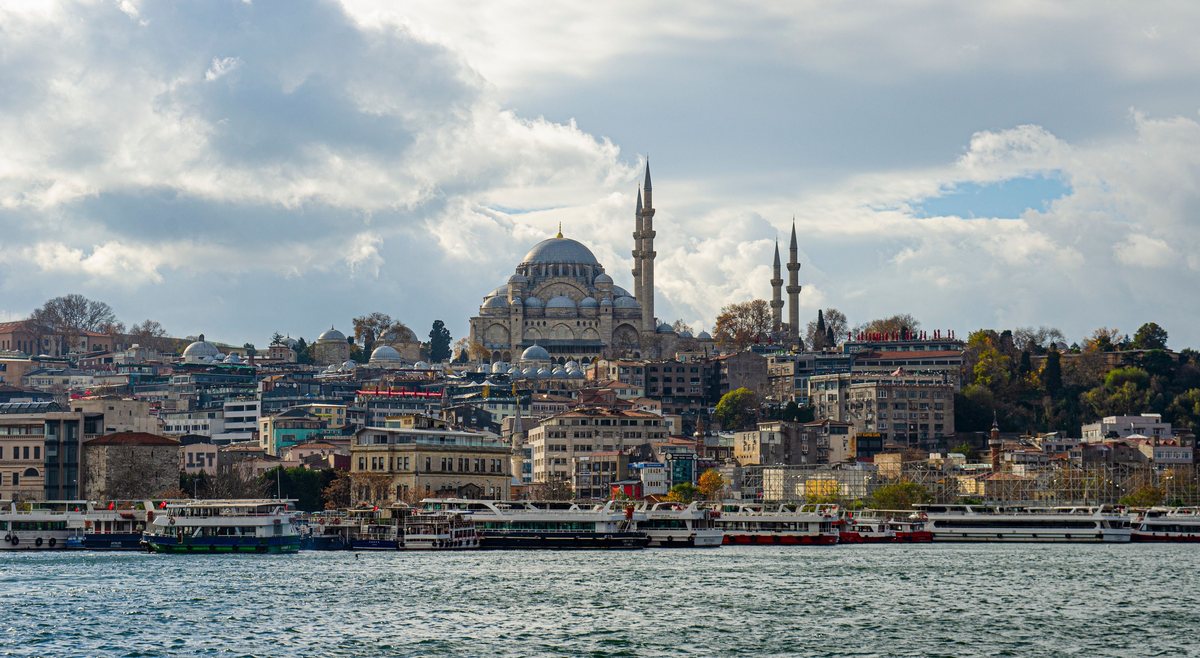
- Day 3, the palace and the bazaars. Topkapı Palace, home of the Ottoman sultans, is closed on Tuesdays, so swap days if you need to. The afternoon belongs to the Grand Bazaar and the Süleymaniye Mosque above the Golden Horn.
- Day 4, slow. Take a public ferry up the Bosphorus or across to Kadıköy on the Asian shore, or wander the colored houses of Balat. Pack in the evening.
Our Istanbul colleagues explain how many days you need in Istanbul, if you want to weigh four nights against three.
Days 5 to 9: Ephesus and the Aegean coast
Five nights on the Aegean is where a fortnight pays off. A ten-day trip gives Ephesus a day and the hills a second; with fourteen days you add the three ancient Ionian cities to the south and a day that asks nothing of you. Sleep in Selçuk, the small town about 3 km from the ancient city, or in Kuşadası on the sea, about 20 minutes away.
Day 5: Istanbul to İzmir
Turkish Airlines, Pegasus and AJet fly from both Istanbul airports to İzmir Adnan Menderes (ADB) through the day, in about an hour. From the airport it is 40 to 50 minutes by road to Selçuk. Keep the afternoon easy: the Byzantine aqueduct in the town center, and the single re-erected column that marks the site of the Temple of Artemis, whose first temple, burned in 356 BC, was one of the Seven Wonders of the Ancient World. Our post on getting from Istanbul to Ephesus and Cappadocia compares the plane with the bus and the car.
Day 6: Ephesus
Be at the Upper Gate when Ephesus opens at 08:00. Most guided tours, ours included, start there and walk the ancient city downhill, about 1.5 km on marble streets past the Odeon, down Curetes Street, to the Library of Celsus and the Great Theater. Inside, the Terrace Houses are the one extra ticket worth buying: seven Roman homes under a modern roof, with their wall paintings and mosaic floors still in place. They cost €15 (€16 from 1 April 2027) on top of the €40 Ephesus ticket (€45 from 1 April 2027), and they are reached by stairs, so they are not wheelchair accessible.
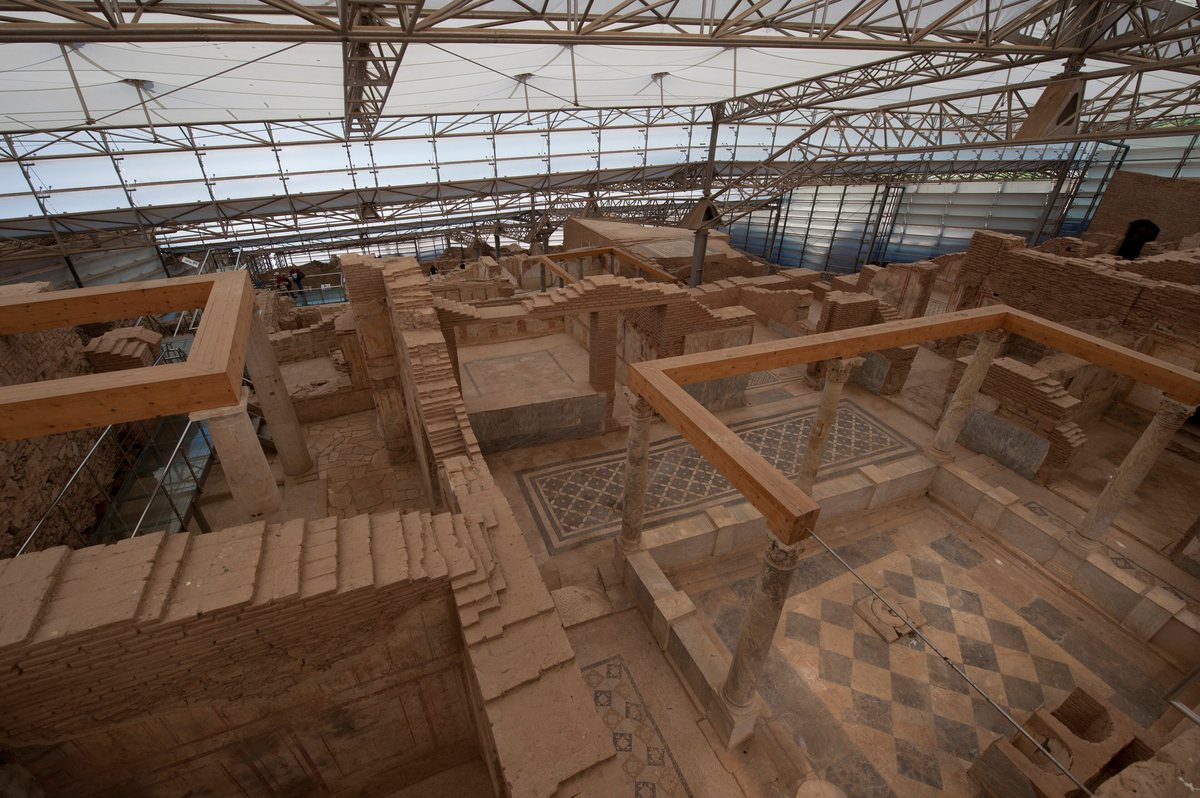
Allow about three hours for the walk with the Terrace Houses, then keep the afternoon for the hotel or the sea. Our sister site The Ephesus breaks the visit down hour by hour.
Would you like one agency for every region?
- One licensed team for the whole fortnight. We arrange the guided days in Istanbul, at Ephesus and its neighbors, at Pamukkale and in Cappadocia, timed around your flights, so you deal with one agency instead of four.
- Skip-the-line entry: we buy your tickets in advance and bill them separately, at exactly the Ministry’s gate price.
- Price: our private Ephesus days from Selçuk or Kuşadası start at €33 per person for groups of 8 or more; smaller groups, and the days in the other regions, get a private quote in writing. A pickup at İzmir airport on day five is priced privately for your group.
- Next step: see how our private tours in Türkiye work, then send us your dates.
Day 7: the hills above Ephesus, and Şirince
UNESCO’s World Heritage listing for Ephesus includes the House of the Virgin Mary and Ayasuluk Hill as well as the ancient city. Start on Bülbül Mountain, about 7 km above the ruins, at the small stone chapel honored by Christians and Muslims as Mary’s last home; it charges its own park fee, roughly €15 per person in Turkish lira. Then come down to the Basilica of St John on Ayasuluk Hill, built over the traditional tomb of the apostle, below the walls of the Ayasuluk Fortress, which is open to visitors, and finish at the Ephesus Museum. Late in the afternoon, drive 8 km up through the olive groves to the hill village of Şirince for dinner.
Day 8: Priene, Miletus and Didyma
This is the day a shorter trip has to leave out. South of Ephesus, three ancient cities lie within about 40 minutes’ drive of one another, and together they make a loop of roughly 190 km by road from Selçuk and back by way of Kuşadası.
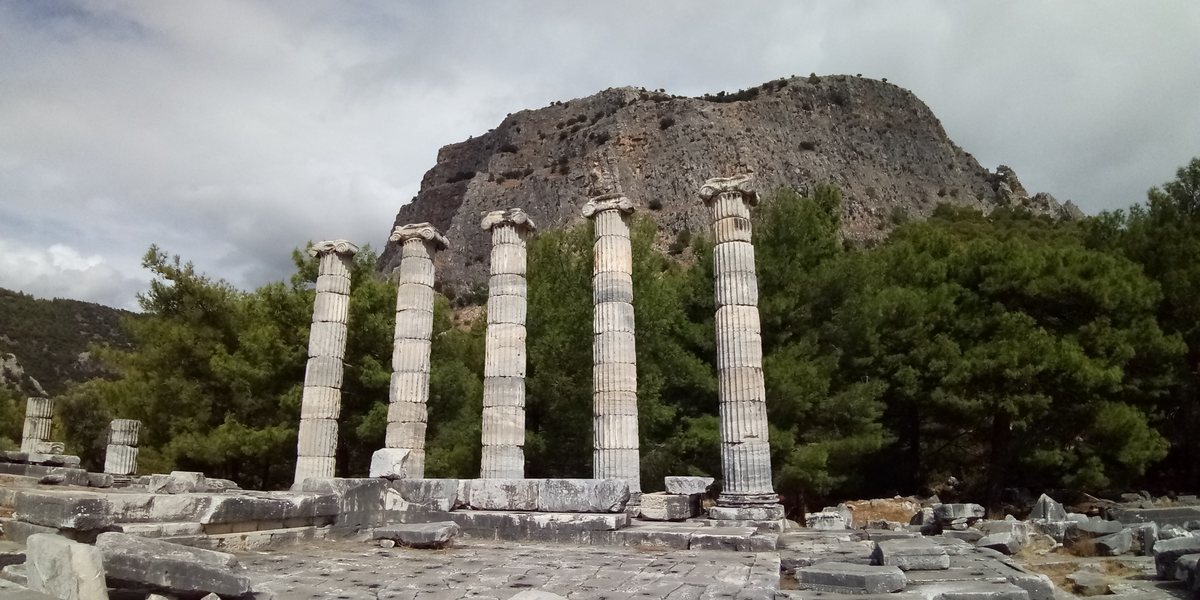
- Priene, about an hour from Selçuk, is a small Greek city laid out on a grid of terraces under the cliffs of Mount Mycale. Five columns of its Temple of Athena stand again, and an inscription from the temple, now in the British Museum, records its dedication by Alexander the Great.
- Miletus, about 25 minutes on, was one of the great harbor cities of Ionia. Its theater still faces the plain where the sea used to be, and in Acts 20 it is where Paul called the elders of Ephesus to meet him.
- Didyma, about 20 minutes further, kept the oracle of Apollo, linked to Miletus by a sacred way. Its temple was never finished, and that is what makes it so impressive: you stand among column bases and the great steps of one of the largest temples of the ancient Greek world.
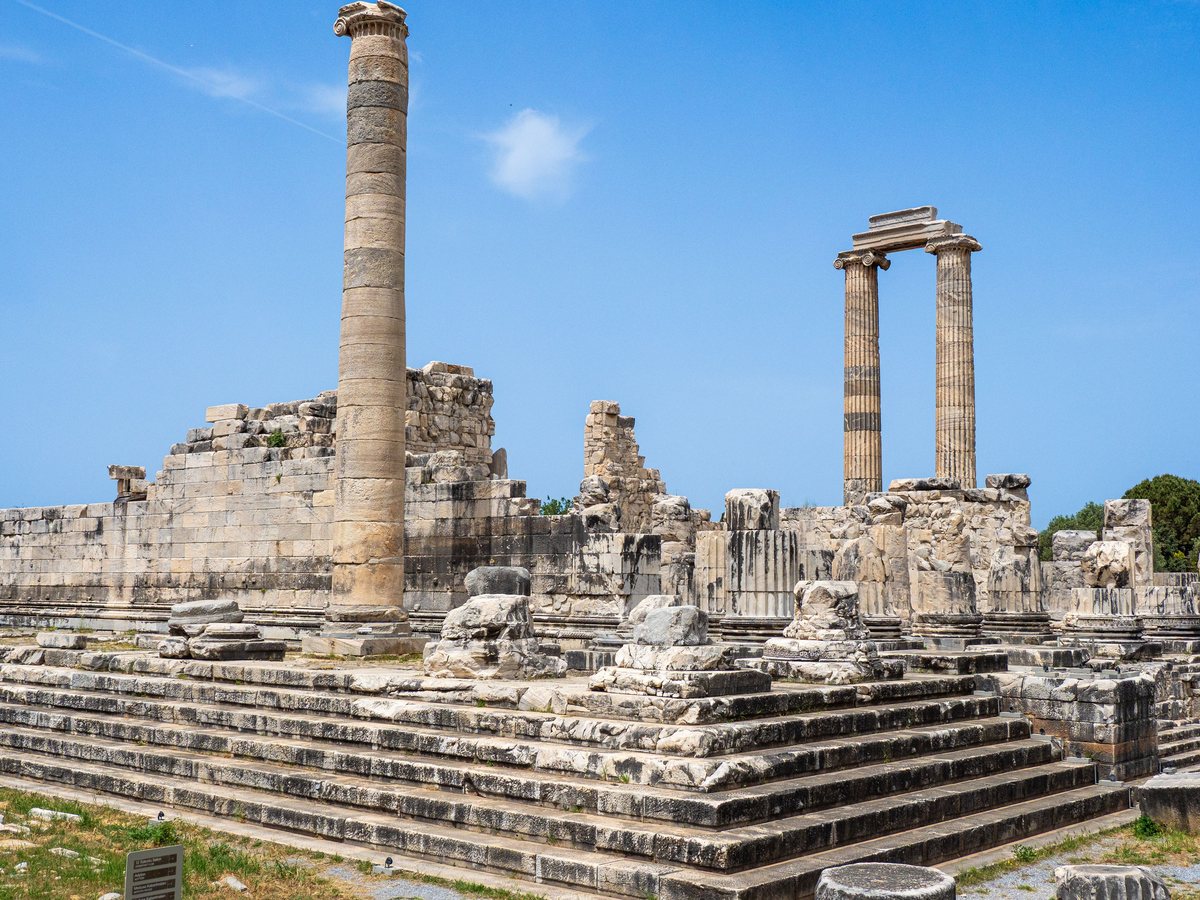
Didyma is a few minutes from the beach at Altınkum, so a swim before the drive back is easy in summer. The three sites are open, sunny and hot from June to September; start early and carry water.
Day 9: the slow day
Plan nothing. After four full days, this is the day that keeps the second week enjoyable. Swim off Kuşadası, try a hammam, take a long lunch in Şirince, or simply stay by the pool. If the weather has spoiled one of the days before, this is also your spare.
Day 10: Ephesus and Pamukkale, with a night at the terraces
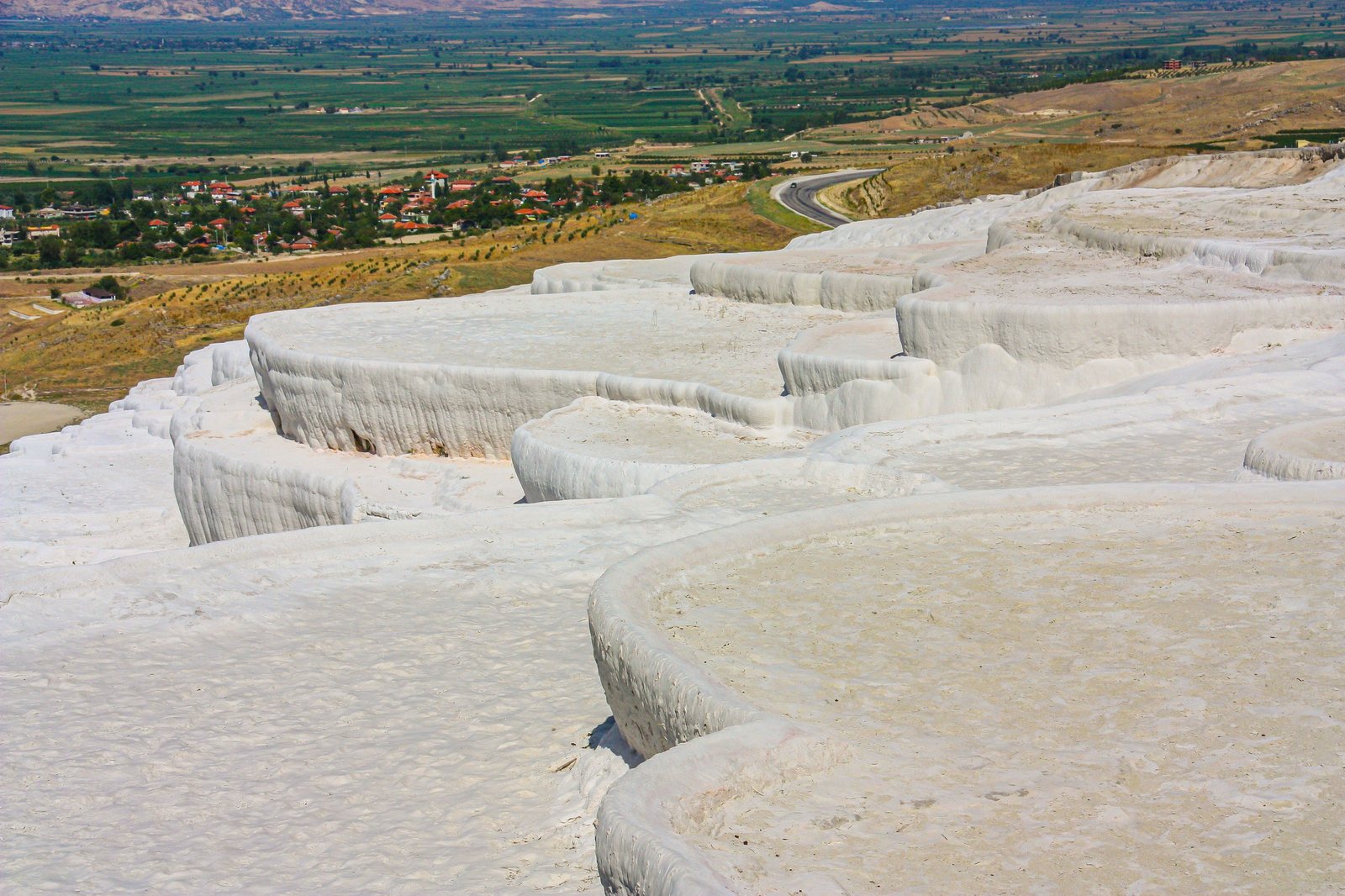
Pamukkale is about three hours inland by road, past the fig and cotton country of the Meander valley. Leave after a late breakfast and you arrive in time for the best of it: Pamukkale’s white travertine terraces and the Roman spa city of Hierapolis on the plateau above them, listed together by UNESCO as Hierapolis-Pamukkale. Walk the terraces barefoot (bring a bag for your shoes), see the theater and the ancient pool, and stay for the sunset over the plain. From 1 April 2027 the Ministry’s ticket for Hierapolis–Pamukkale is €35.
Sleeping in Pamukkale village is what makes the visit unhurried: seeing Ephesus and Pamukkale on the same day is possible, but it puts six hours of road around one visit. Our sister site covers Pamukkale and the road from Ephesus in more detail.
Day 11: the flight legs from Denizli to Cappadocia
This is the one real travel day of the fortnight, and it is worth planning carefully. There is no direct flight from Denizli to Cappadocia, so the route runs through Istanbul:
- Pamukkale to Denizli Çardak airport (DNZ): about 70 km, a little over an hour by road.
- Denizli to Istanbul: direct flights of about an hour with Pegasus, Turkish Airlines and AJet. Check which Istanbul airport yours uses: Istanbul Airport (IST) or Sabiha Gökçen (SAW).
- Istanbul to Cappadocia: about 75 minutes to Kayseri (ASR), about 70 minutes by road from Göreme, or to Nevşehir Kapadokya (NAV), about 40 minutes from Göreme.
Book both flights on one ticket, from the same Istanbul airport, so a late first flight is the airline’s problem rather than yours: SAW and IST are on opposite sides of the city. You land in Cappadocia in the evening, ready for an early night before the balloon.
The alternatives. If the Denizli connection does not suit your dates, see Pamukkale as a long day trip from the Aegean instead, and fly direct from İzmir to Kayseri on the days that flight runs, about an hour and a half. Or go by road: Pamukkale to Göreme is about 600 km by way of Konya, a full day of nine or ten hours with stops, which only makes sense if you want to see Konya on the way.
Days 12 to 14: Cappadocia, and the flight home
Three nights in Cappadocia means three dawns, and the dawns are what you came for. Balloons fly only when the morning weather allows, and the decision is made each morning, so the first flight attempt belongs on day 12, with days 13 and 14 as spares. UNESCO lists the valleys as Göreme National Park and the Rock Sites of Cappadocia.
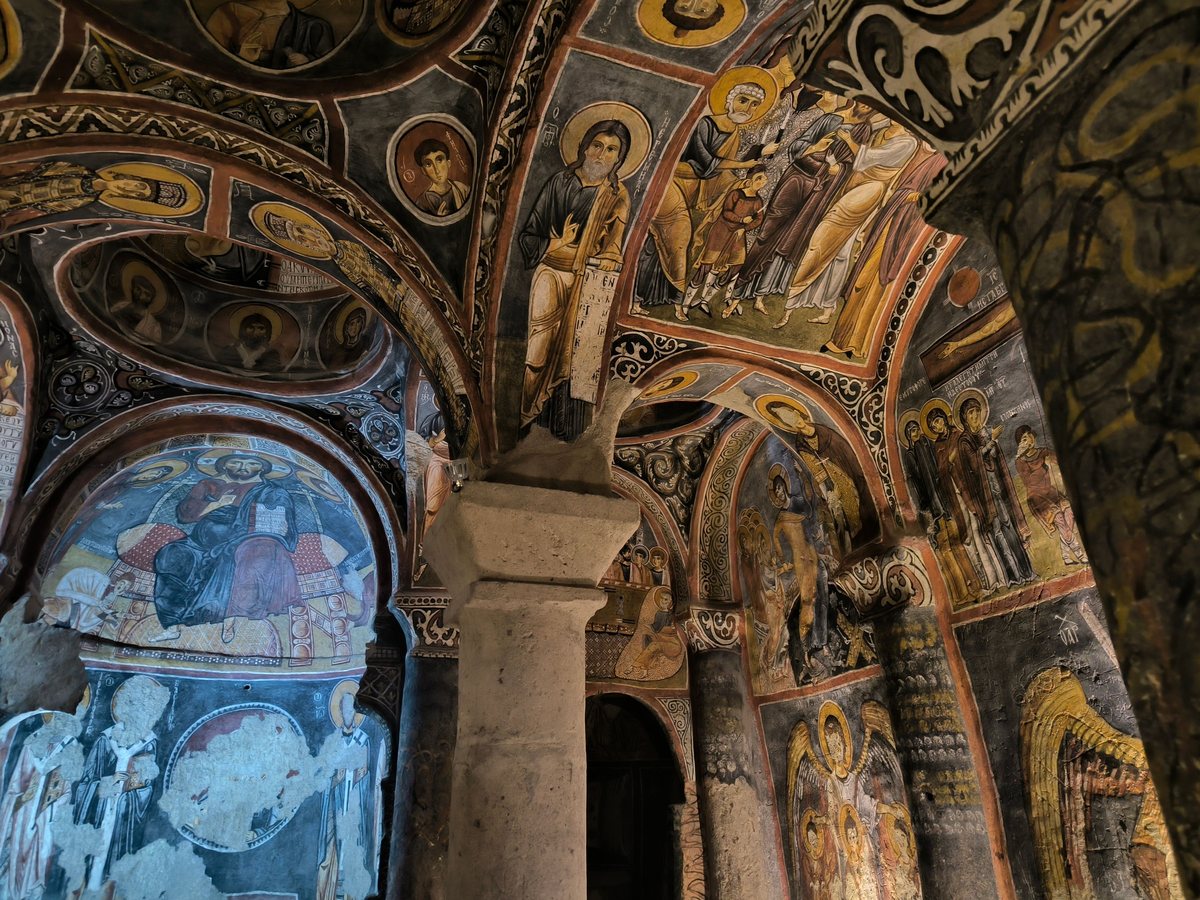
- Day 12. The balloon at dawn, if it flies, then the Göreme Open-Air Museum, a cluster of rock-cut churches with painted walls (€22 from 1 April 2027 under the Ministry’s tariff). In the late afternoon, walk one of the valleys above Göreme as the rock turns pink.
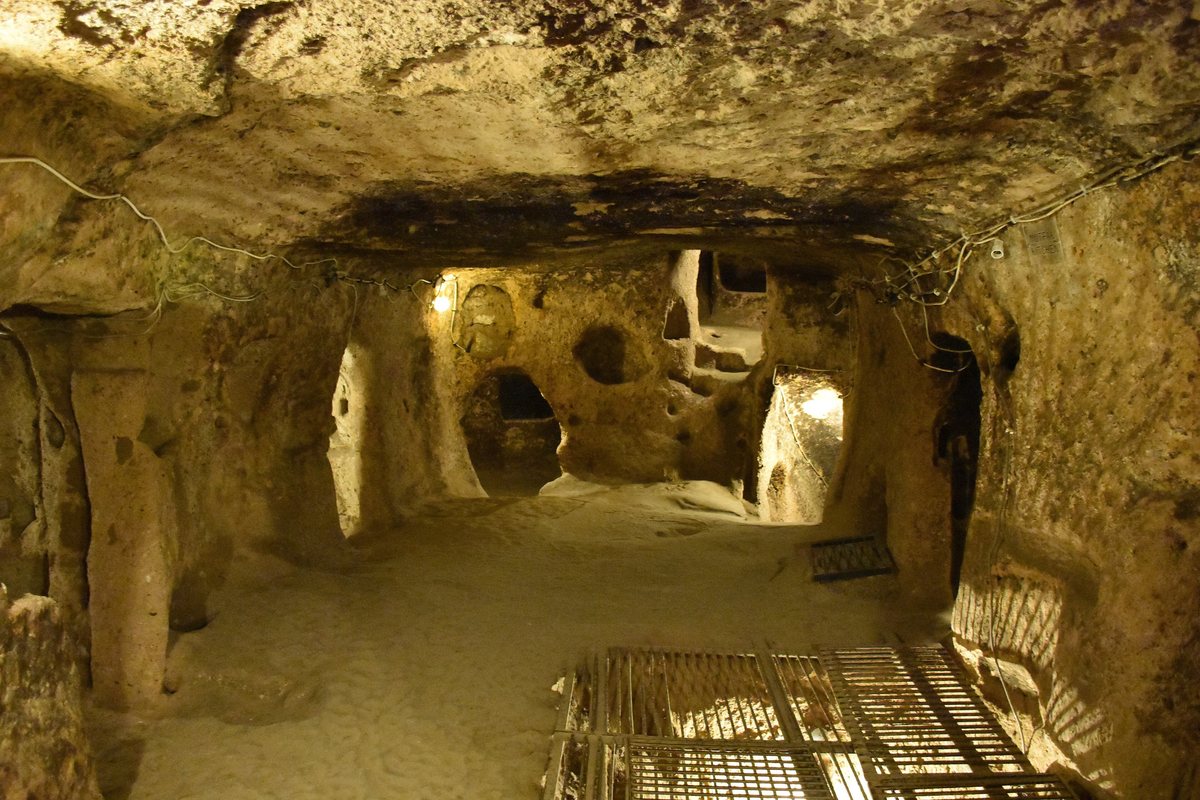
- Day 13. Go underground. Kaymaklı, about 30 minutes south of Göreme, and Derinkuyu beyond it are cities dug down into the soft rock, with stables, chapels and rolling stone doors (€15 each from 1 April 2027). Add the fairy chimneys of Paşabağ or the castle rock of Uçhisar on the way back.
- Day 14. A last balloon chance at dawn, then the flight from Kayseri or Nevşehir to Istanbul, about 75 minutes, to connect to your flight home. Leave a generous gap between the two flights, or sleep the last night near Istanbul Airport.
Our Cappadocia team does the sums on balloon mornings in how many days in Cappadocia.
Other ways to run a 2 week Turkey itinerary
The fourteen days above are a shape, not a rule. The variations we plan most often:
- Cappadocia first. Useful if you land in winter, when the Aegean is mild and Cappadocia is cold: Istanbul, then Cappadocia, then fly through Istanbul to İzmir, and home from İzmir if your airline flies there.
- The direct İzmir to Kayseri flight. On the days it runs it saves the Istanbul connection, at the cost of the Pamukkale night. Check it first when you fix your dates.
- Fewer moves. Drop Pamukkale and give the night to the Aegean or to Cappadocia. You lose one region and one flight, and gain a calmer second week.
- A third week. Keep these fourteen days and add one chapter, such as the Seven Churches of Revelation from the Aegean or a few days on the Mediterranean coast. Our trip-length guide sets out the three-week versions, and our destinations page shows which of our sites covers each region.
- Holidays. In 2027 Ramazan Bayramı falls on March 9 to 11 and Kurban Bayramı on May 16 to 19. On the first day of each, the Ministry’s museums and sites stay closed until 13:00, and flights fill early in both weeks.
If you want a shorter trip, our 7 day Turkey itinerary keeps only Istanbul and Ephesus. And if you send us your dates and what matters most to you, we will tell you plainly what fits into fourteen of them.
About this page
- Written by: the 141 Journeys guide team, licensed guides who plan and guide fortnights like this one in every region on the route.
- Sources: the Ministry of Culture and Tourism’s muze.gov.tr and its 2027 tariff for gate prices and hours; the National Palaces’ Topkapı Palace page; UNESCO’s World Heritage listings for Ephesus, Hierapolis-Pamukkale and Göreme and Cappadocia; DHMİ, the Turkish state airports authority; the airlines’ published schedules; the Directorate of Religious Affairs’ calendar for the 2027 holidays.
- Last reviewed: November 2026. Gate prices, opening hours and flight schedules change; check them for your dates before you book.
Add 141 Journeys as a preferred source on GoogleGoogle then highlights our articles for you in Top Stories and in its AI answers.
Frequently asked
How much does two weeks in Turkey cost?
It depends mostly on your hotels, but the fixed costs are easy to list. In 2026 Ephesus is €40 per adult and the Terrace Houses €15 more; from 1 April 2027 they become €45 and €16, and the Ministry’s 2027 tariff sets Hierapolis–Pamukkale at €35 and the Göreme Open-Air Museum at €22. Add four domestic flights and, if you want one, the balloon. Our trip-cost guide covers the rest.
Can you see Ephesus and Pamukkale in one day?
Yes, but it is a long day. Pamukkale is about three hours by road from Ephesus each way, so a one-day visit to both means six hours in a vehicle. Sleeping one night in Pamukkale, as this itinerary does, turns it into two easy days. Our sister site runs it both ways as an Ephesus and Pamukkale tour.
Is there one tour that covers Cappadocia, Pamukkale and Ephesus?
Yes. As a licensed agency (TÜRSAB no. 15746) we arrange the guided days in every region of this route, so one team plans Istanbul, Ephesus, Pamukkale and Cappadocia around your flights. Send us your dates through our private tours page and we reply with a written plan and price.
Does this 2 week Turkey itinerary work with kids?
Yes. Ephesus is a 1.5 km walk, mostly downhill, and foreign children aged 8 and under enter Ministry sites free on a passport. The Aegean slow day and the hotel pool keep the pace gentle. Ask the balloon company about its age rules before you book, and remember that the Terrace Houses are reached by stairs.
Can I add Greece to two weeks in Turkey?
Only by giving something up. From Kuşadası, ferries cross to Samos several times a day in summer but only a few times a week from late autumn to spring. A Greek island needs three or four days of its own, so with two weeks the usual trade is Cappadocia. Bring your passport: it is an international border.
When is the best time for two weeks in Turkey?
April to June and September to October. The Aegean is warm without the July and August heat, Cappadocia’s mornings are mild for the balloons, and Istanbul is pleasant on foot. Winter works too, with cold, sometimes snowy days in Cappadocia; our guide to the best time to visit Türkiye goes month by month.
What happens if the balloon flight is canceled?
You try again the next morning. Balloons fly only when the morning weather allows, and the decision is made at dawn, so three nights in Cappadocia give you three chances. Ask your balloon company before you book how it handles a canceled flight. It is the main reason not to cut Cappadocia to one night.
Does our international baggage allowance carry over to the domestic flights?
No, not on a separate ticket. Each domestic flight follows its own airline’s rules and the fare package you buy, and the cheapest fares on some airlines include only a small cabin bag. With four domestic flights in this itinerary, check the allowance before you pay. It is the question most travelers only think of at the check-in desk.